Kolkata’s ‘Jadu Ghar’: A Treasury that Narrates Centuries of Stories
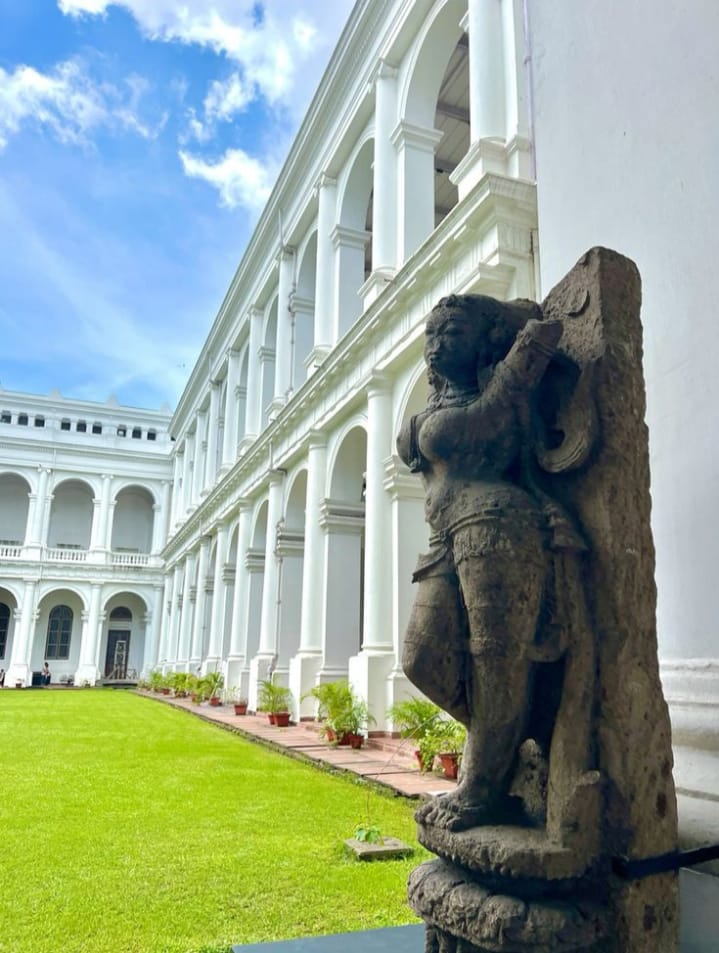
Kolkata: More than just a building, the Indian Museum in Kolkata a confluence of art, culture, and history is a living testament to the glorious past of Indian civilization. Affectionately called the ‘Jadu Ghar’ (House of Magic), it stands as one of the oldest and most significant museums in the Asia-Pacific region. Established in 1814, it ranks among the oldest museums in the world. In its journey spanning over two centuries, this museum has been the custodian of millions of artifacts, fossils, and archaeological specimens, shedding profound light on India’s vast history, geology, and anthropology.
A Glimpse into History: The Genesis of the ‘Jadu Ghar’
The Indian Museum was founded on February 2, 1814, by the Asiatic Society of Bengal. Among its founding figures was the prominent Danish botanist Dr. Nathaniel Wallich, who also served as its first Honorary Curator.
Initially housed within the Asiatic Society’s premises, the museum’s core purpose was to promote knowledge and study. Society members contributed a large number of natural and archaeological specimens. As the collection grew, the need for a larger, dedicated space became evident.
Finally, in 1878, the museum was relocated to its present majestic building, designed by architect W.L. Granville. This structure is a fine example of Victorian architecture, reflecting the grandeur and scientific zeal of that era.
The idea behind the museum’s establishment was not merely to collect objects but to systematically present the natural history, geology, anthropology, and art of the Indian subcontinent. It became an early center for scientific study and research in India.
Six Expert Sections: An Ocean of Knowledge
The Indian Museum is a vast educational institution, divided into six main sections, each dedicated to a specific field of knowledge. These sections manage a collection of millions of objects, displayed across approximately 35 galleries:
- Art Section
This section showcases an extraordinary collection of sculpture, painting, and decorative arts. It includes:
· Ancient Indian Sculpture: Features masterpieces from the Maurya, Shunga, Kushan, and Gupta periods. One of the most significant displays is the Bharhut Stupa Railing from the 2nd century BCE. These intricately carved stone railings depict Buddhist Jataka tales and Indian folk art.
· Medieval Sculpture: Includes Hindu, Buddhist, and Jain idols from the Pala, Sena, Chalukya, and Chola periods, illustrating the artistic evolution of Eastern India.
· Paintings: Houses a rich collection of Mughal and Pahari miniature paintings, along with European oil paintings from the colonial era.
- Archaeology Section
This section is a treasure trove of historical artifacts obtained from archaeological excavations across India.
· Indus Valley Civilization: Displays seals, pottery, and terracotta figures from Harappa and Mohenjo-daro, representing the earliest evidence of Indian urban planning and craftsmanship.
· Inscriptions and Coins: Features a significant collection of ancient and medieval inscriptions, as well as an extensive compilation of coins from various eras of Indian history, invaluable for studying economic history.
· Egyptian Mummy: Houses a fascinating and rare exhibit—an Egyptian Mummy and its sarcophagus. This artifact offers insights into cultural exchange and comparative studies among ancient civilizations.
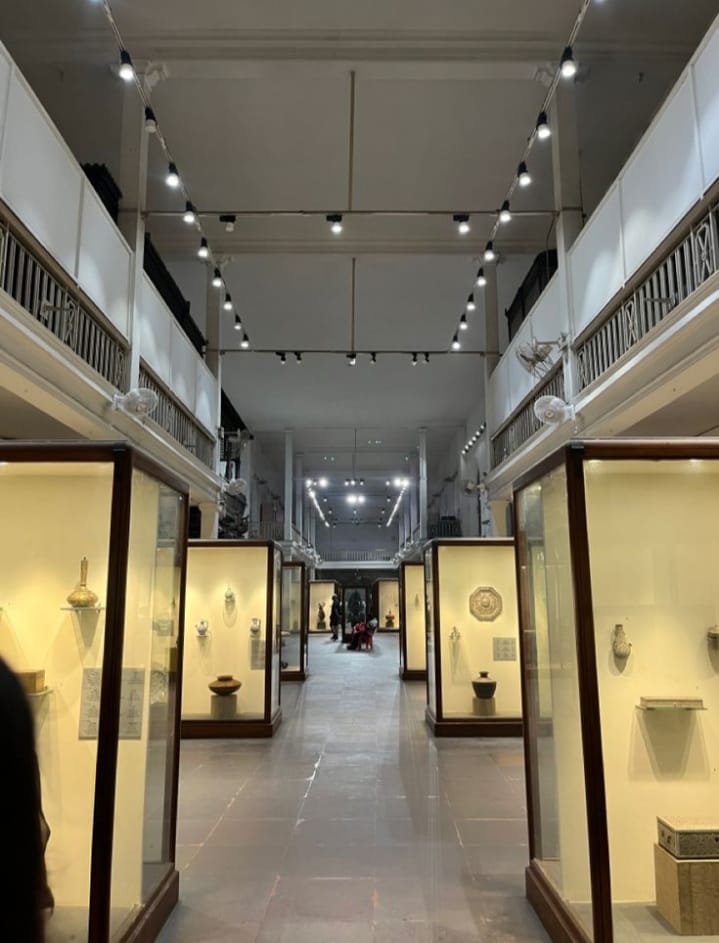
- Anthropology Section
This section presents the study of various ethnic groups and their lifestyles in the Indian subcontinent.
· Cultural Anthropology: Displays clothes, tools, jewelry, and daily-use items from tribal communities across different Indian states. It helps in understanding their unique traditions and social structures.
· Physical Anthropology: Includes exhibits related to human evolution and the physical characteristics of different human groups.
- Geological Section
The museum serves as a crucial center for geological study.
· Rocks and Minerals: Features a comprehensive collection of rocks, minerals, and metals from various regions of the Indian subcontinent, providing information on geological structure and economic minerals.
· Meteorites: Also houses a collection of meteorites, some considered very rare, attracting those interested in cosmic studies.
- Zoological Section
This section illustrates the immense diversity of Indian wildlife.
· Taxidermy Specimens: Displays preserved (stuffed) specimens of Indian and foreign animals, birds, and fish. It offers a chance to see species that are now rare or on the brink of extinction.
- Botanical Section
This section focuses on India’s botanical wealth.
· Plants and Fossils: Includes herbarium specimens of Indian flora, economically important plants, and plant fossils.
Highlights of Distinguished Exhibits and Collections
Some collections of the Indian Museum hold not just national but international significance:
· Replicas of Ashoka’s Pillars: Excellent replicas of Emperor Ashoka’s famous pillars, showcasing the polished stonework of the 3rd century BCE Mauryan period.
· Relics of the Buddha: It is believed the museum houses a small portion of the Buddha’s relics in a reliquary casket.
· Temple Art of Odisha: An impressive collection of stone carvings from the Sun Temple at Konark and other Odisha temples.
· Mammoth Fossil: The Zoology Section displays fossils of giant mammals that existed in the Indian subcontinent millions of years ago.
· Coin Gallery: Presents India’s history through coins, featuring a collection ranging from ancient punch-marked coins to modern ones.
A Center for Education and Research
Beyond its exhibitions, the Indian Museum functions as a premier institution for education and research. The museum possesses a vast library containing rare books and manuscripts on art, archaeology, natural sciences, and history. This library is a vital resource for scholars and researchers.
The museum regularly organizes educational programs, workshops, and lectures to connect the public with India’s heritage and scientific knowledge. Its curators and researchers are engaged in fundamental research on various aspects of Indian history, anthropology, and natural history.
Conservation and Modernity: Challenges for the Future
Given its vast and priceless collection, the Indian Museum’s greatest challenge is the scientific conservation of these artifacts. Over time, materials degrade, and protecting them from humidity, temperature, and pests is a continuous process.
In recent years, the museum has focused on digitization and modernization. Several galleries have been renovated, and interactive displays have been installed to make the experience more engaging for visitors, especially the younger generation. These efforts are crucial steps towards making the museum not just a conservator of the past but also a knowledge hub for the future.
The Indian Museum is a ‘living’ textbook that transports us centuries back. It teaches us who we are, where we came from, and the immense diversity witnessed by the Indian subcontinent in both nature and human history. Situated in the heart of Kolkata, this ‘Jadu Ghar’ is not only a must-visit destination but also an invaluable and inspiring symbol of our shared national heritage.